Evidence summary · optimized prescription 10 June 2026
EmberScope evidence summary
The executive readout for the current drone thermal camera concept: what fits, what the models show, which detector path is preferred, and which tests remain before fire-detection claims are credible.
Current position
The optimized optical design now fits the envelope and reaches the diffraction scale on axis. Detector and radiometry performance still need proof.
Why this matters
The design search has produced its first physically realizable, near-diffraction-limited prescription.
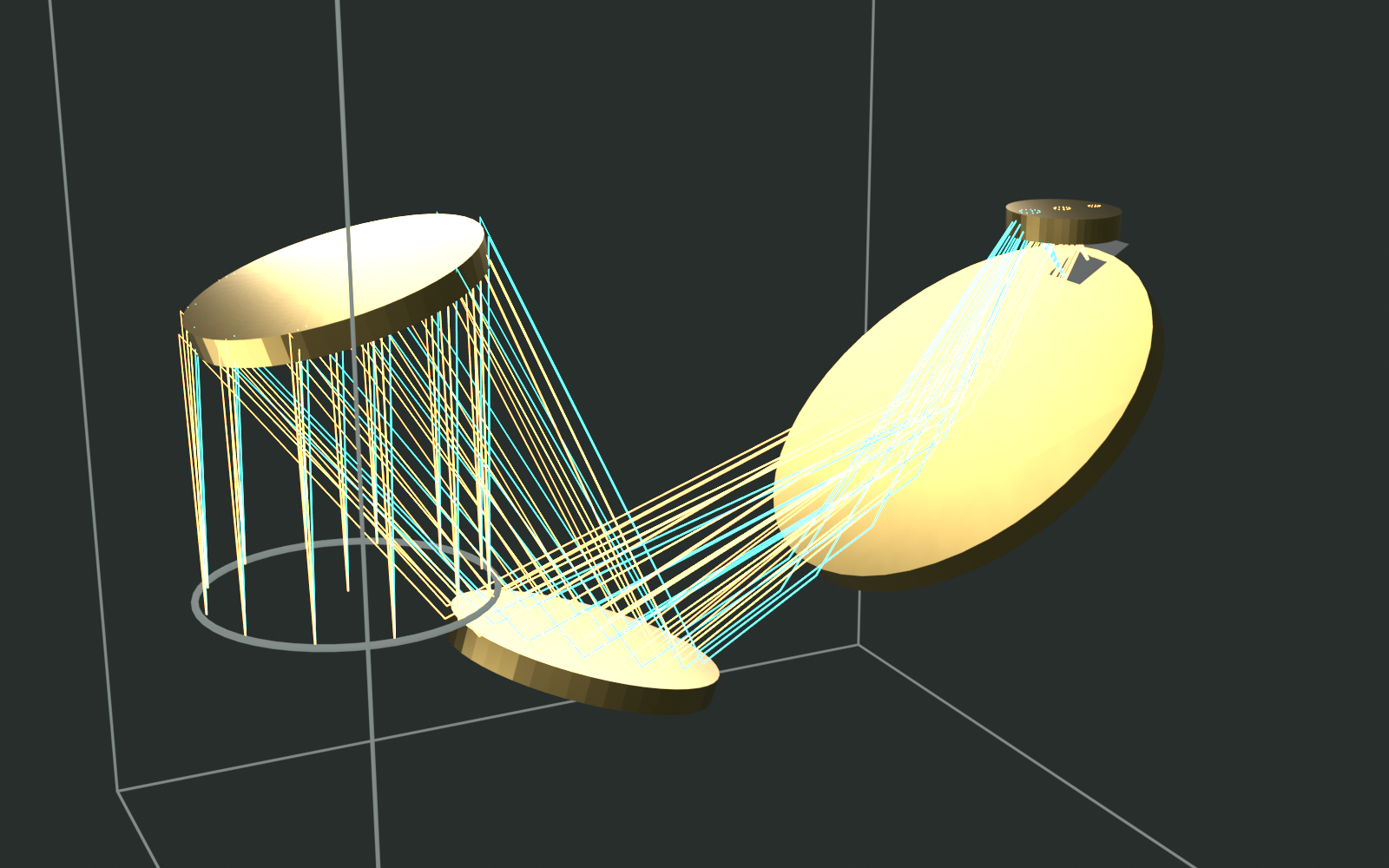
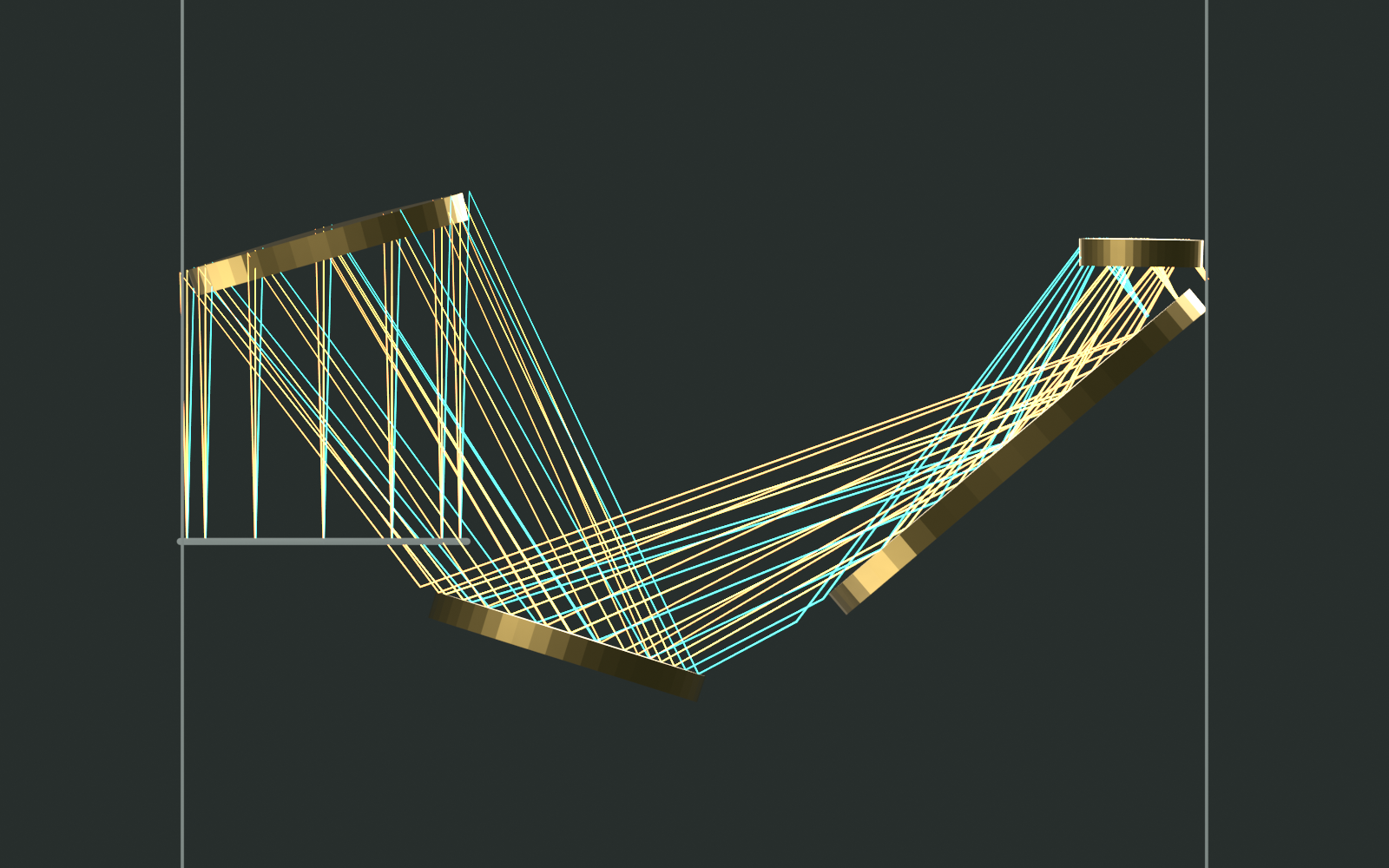
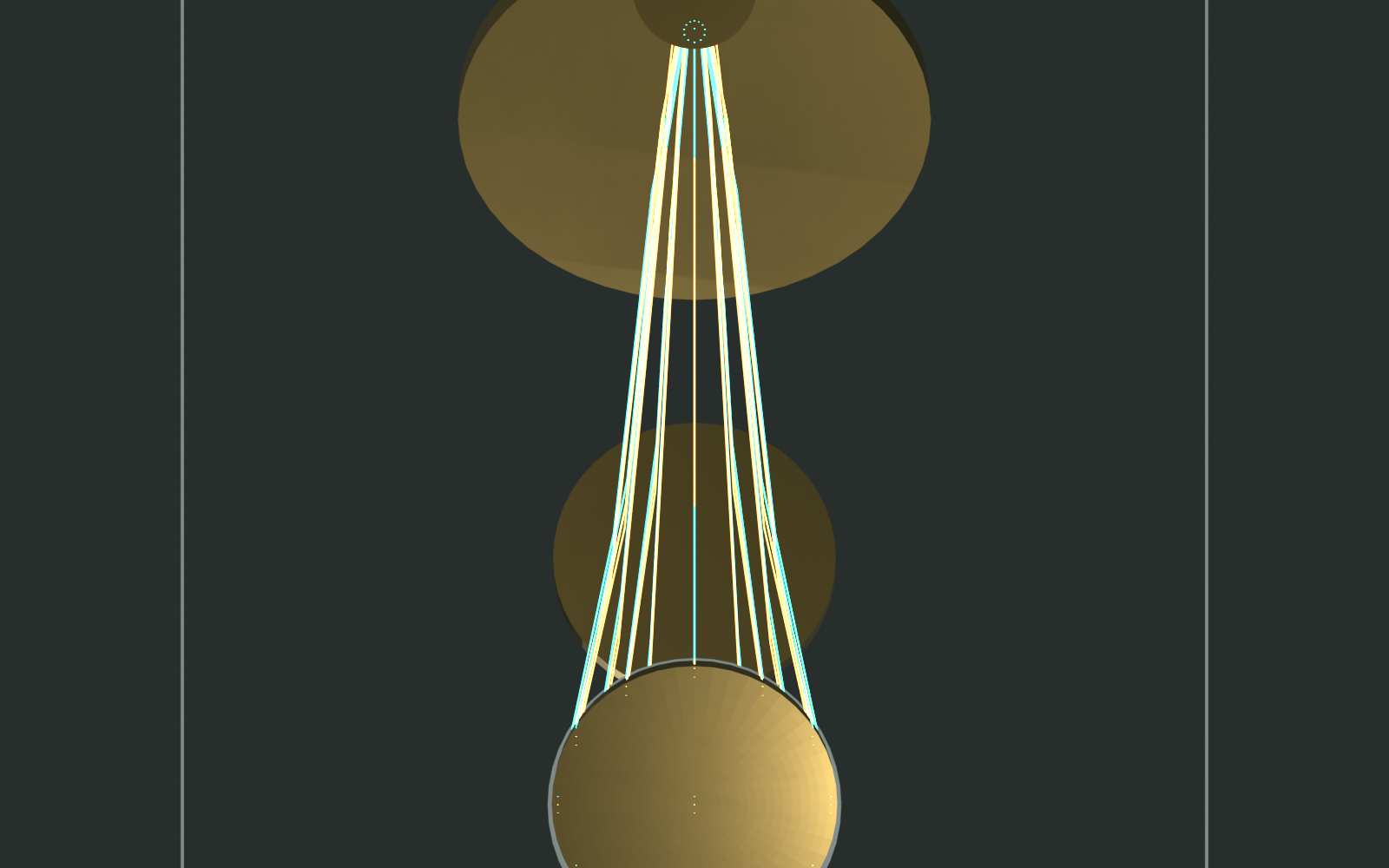
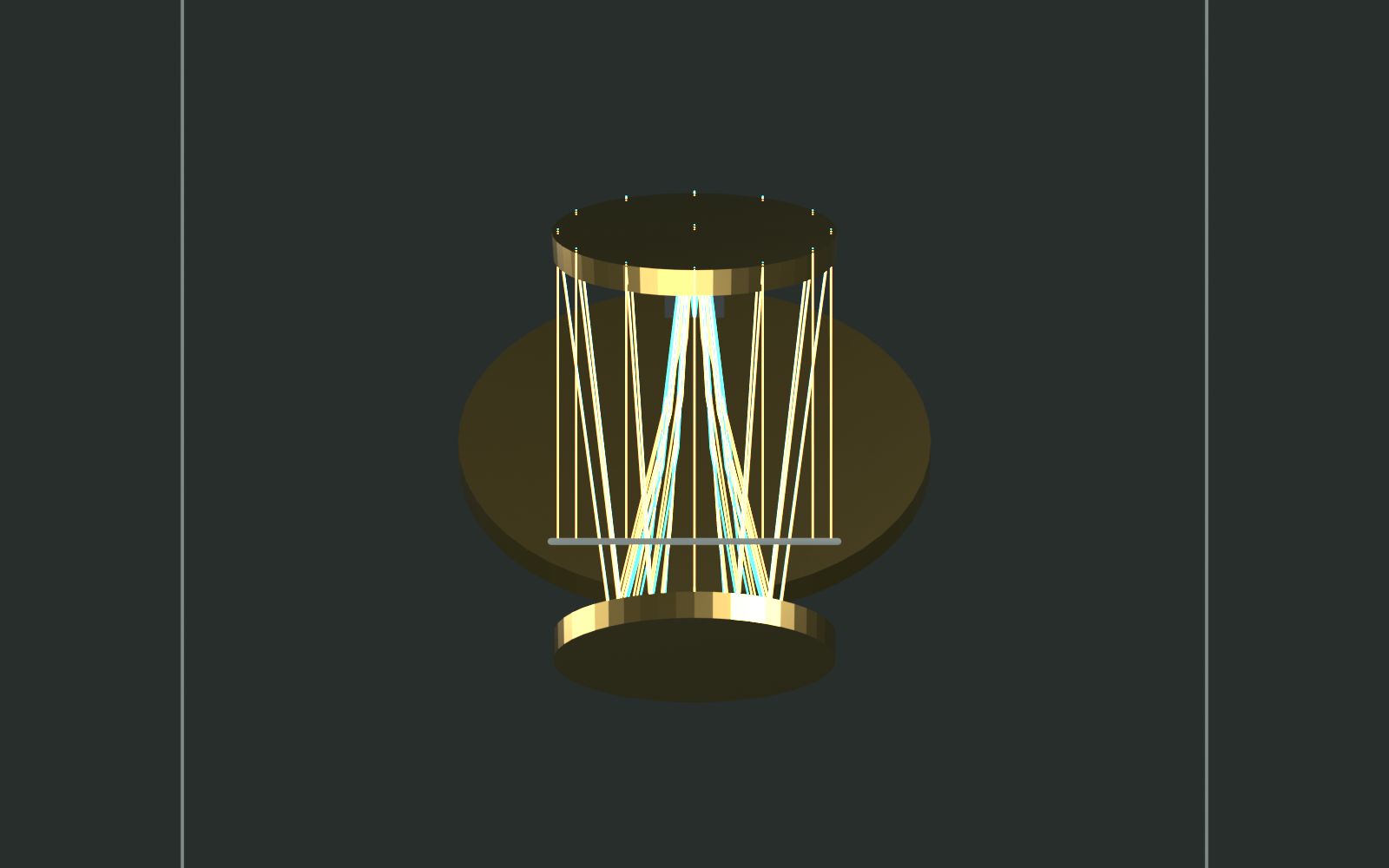
Compact geometry closes
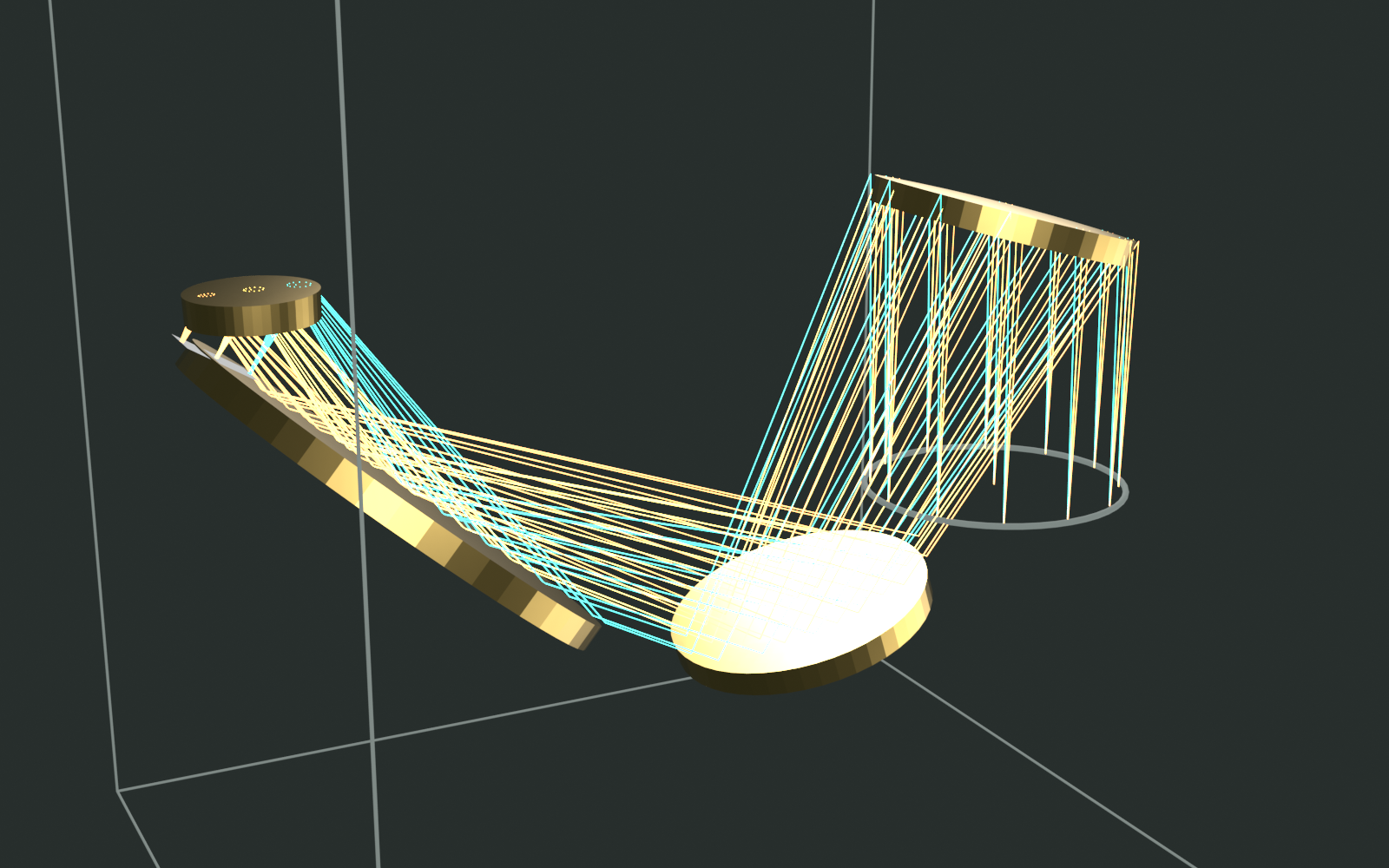
The optimized four-mirror train is unobscured, fits the 150 mm cube at 149.6 mm span, and leaves most of the 2 kg payload budget for detector, electronics, and structure.
Image quality reaches the diffraction scale
Centre-field blur (54 um RMS) is below the F/5 diffraction radius (67 um); edge fields sit at 80–106 um. Earlier candidates were thousands of micrometres and physically self-obstructed.
F-number now limits single-pixel energy
At F/5 and 11 um wavelength, diffraction alone spreads a point source over about four 17 um pixels. Concentrating more energy per pixel requires a faster system (lower F-number), not a better version of this prescription.
Engineering evidence
Evidence currently available.
Mission frame
Drone-mounted LWIR payload, small early-fire target, 150 mm cube aspiration, and sub-2 kg whole-payload boundary from the current mission brief.
Optical evidence
An optimized four-mirror prescription (importable surface table plus metrics CSV), the earlier packaging study with CAD/Blender geometry and renders, and validation gates that re-check the published numbers.
Design search
Manufacturability, rough fabrication cost, tolerance budgets, and a three-design shortlist shape the broader candidate search.
Current caveat
The current optical geometry does not yet include detector-coupled optical exports, radiometric closure, or false-positive modelling.
Mission constraints
The hard constraints are separated from provisional assumptions so detector, radiometry, and survey decisions can be made against the same target.
| Quantity | Current proof point | Interpretation |
|---|---|---|
| Architecture | Unobscured folded four-mirror reflective train, conic surfaces only | Physically realizable (no mirror sits in the beam) and diamond-turnable without freeform fabrication risk. |
| Entrance aperture | 40.0 mm | Drives the F/5 focal length and the diffraction scale below. |
| Focal length / F-number | 195 mm measured in the model, F/5.0 (200 mm target) | Within 3 percent of the plate-scale target; earlier candidates never met plate scale. |
| Sensor reference | 640 x 512 at 17 um pitch | Keeps blur and sampling discussion tied to a concrete uncooled detector class. |
| Envelope max span | 149.6 mm | Fits the 150 mm target cube with little margin; envelope is an active constraint. |
| Mass proxy | 0.34 kg optical head | Coarse allowance only, but leaves clear room under the 2 kg whole-payload boundary. |
| RMS spot (modelled) | 54 um centre field; 80–106 um at the 1.5 deg edge | Centre field is below the 67 um F/5 diffraction radius; edges are within a factor of two of it. |
| Throughput (modelled) | 94–97 percent across the field | Remaining rim-ray clipping is a tolerance-budget item, not a layout flaw. |
| Single-pixel energy | 5–10 percent in a 2 x 2 pixel patch (diffraction caps this near 20 percent at F/5) | The binding constraint is now the system F-number, not further optimization of this prescription. |
What remains to prove
The evidence package supports maturation, not procurement or field acceptance.
Detector-coupled optics
Replace generic detector-energy assumptions with a Boson+ 640 radiometric focal-plane export and measured throughput.
Radiometry closure
Tie GSD, NETD, calibration residuals, and alert quality classes into one detection table.
Field validation
Run the bench, surrogate-target, low-altitude flight, false-positive, and acceptance-review ladder before operational claims.
Expert update
The next de-risking artifact is a fabricable optical design.
Expert guidance narrows the mission case to a smouldering heat source, one-hour revisit, 5 percent sortie-level false-alarm tolerance, uncooled microbolometer detector class, and hard 150 mm / 2 kg payload boundary.
Altitude, speed, field of view, and exact detector core should be derived from those constraints. The compact reflective/freeform direction remains encouraged, but the next package has to show manufacturable surfaces and a credible fabrication path. The optimized conic-only prescription of 10 June 2026 is the first response to that request; tolerancing and a vendor-checked fabrication route are the remaining steps.